
Repair Blog · Jupiter, FL
Jupiter Snowbird Washer Checklist
Most snowbird washer disasters happen in the first week back: a pump that seized over the summer, a hose that cracked, a washer full of mold. This checklist — for leaving, for while you're away, and for your first day back in Jupiter — prevents nearly all of them.
By the Jupiter Washer Pros team · October 22, 2026
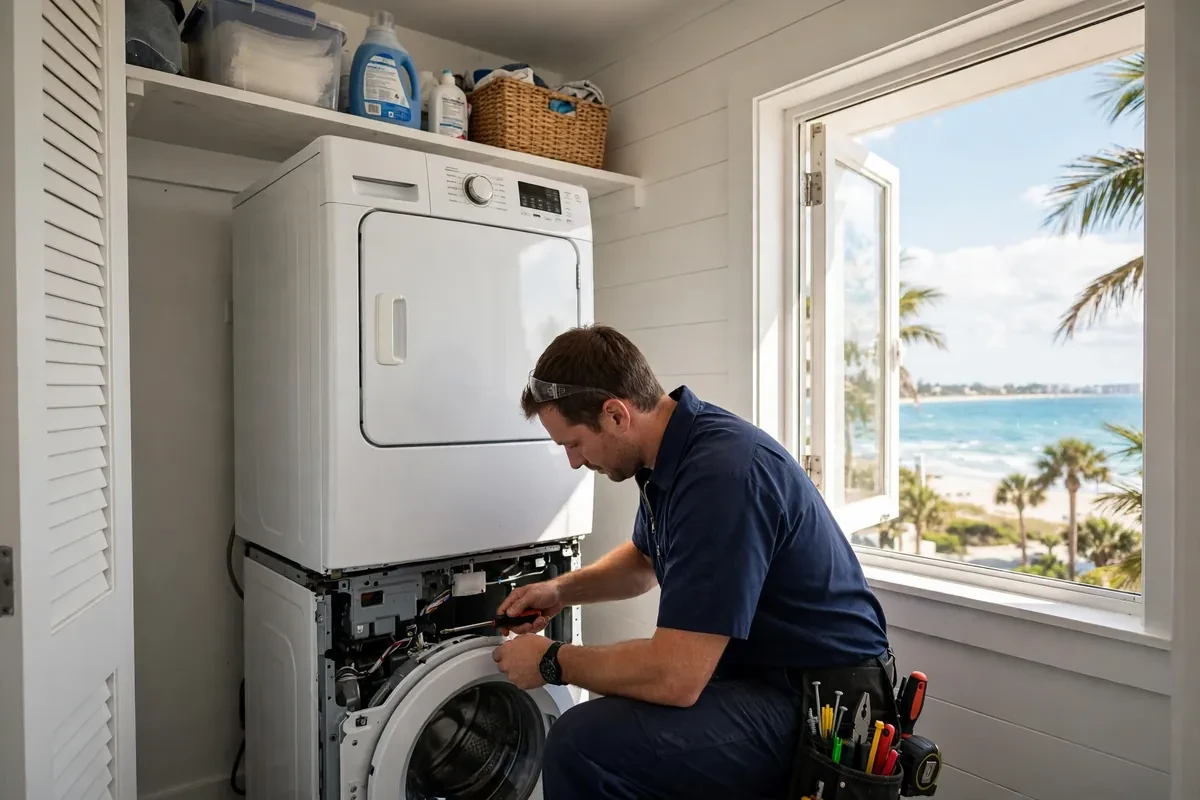
Every fall we meet Jupiter homeowners who did everything right — except the washer. A closed Florida house in summer is hot, humid and still, and machines that sit unused for months fail in predictable ways: pumps seize, rubber hoses crack, and mold moves into any washer closed up damp. This checklist — built from the return-day repairs we run in Admirals Cove, Jonathan's Landing and seasonal neighborhoods across Jupiter — takes about an hour before you leave and half an hour when you return.
Before you leave: the departure checklist
Work through this list in the last two days before you head north:
- •Washer water valves: close them. Turn off both supply valves behind the washer — or, if you are comfortable doing it, disconnect the hoses and drain them into a bucket. A supply hose that bursts in an empty house in July can run for weeks; this step prevents the worst seasonal-home water damage we see.
- •Inspect the hoses you're leaving connected. Any hose that is bulging, rust-stained at the fittings or more than about five years old should be replaced before you go, not after. Braided stainless hoses are the right call in a seasonal home.
- •Run a final cleaning cycle, then dry the machine out. Run an empty hot cycle with a washer cleaner or a cup of white vinegar, wipe the door boot folds dry, and leave the door and detergent drawer open. Mold needs a closed, damp drum — do not give it one.
- •Washer drain pump filter: clean it. Open the pump filter access, place a tray underneath, and rinse the filter clear of lint, coins and grit. A filter left clogged all summer is how a pump seizes — and the first cycle back fills but never drains.
- •Detergent drawer: empty and dry it. Pull the drawer out, rinse away residue, dry it fully, and leave it open. Detergent left caked in a closed drawer all summer hardens and feeds mold.
- •Run one last drain-and-spin test. Run the washer empty through a full drain and spin. If the pump hums but the drum stays wet, that is a repair to make before departure — not a flood to discover in the fall.
- •Check under and behind the washer. Look for slow drips, a damp floor, or rust at the feet and connections. A slow seep found now is a fitting; found in the fall, it is a floor.
- •Unplug the washer for storm season. Unplug the machine and switch its breaker off. Seasonal homes ride out every summer storm unattended, and an unplugged washer board cannot take a surge.
- •Main valve note. If you shut off the home's main water valve (many seasonal owners do), still close the washer valves individually — that connection fails most.
While you're away: what happens in a closed Florida home
Two forces work on your washer all summer, and both are manageable:
- •Humidity and mold. A closed Jupiter home in August is a greenhouse. Even with the AC set high, humidity creeps into drums, boots and detergent drawers. This is why the "leave it open and dry" steps above matter more than any product.
- •Storm-season power surges. Summer lightning around Jupiter is relentless, and surges travel the lines looking for electronics — control boards in washers are the usual casualties. Whole-home surge protection at the panel is the strongest defense; at minimum, plug-in protectors on the laundry pair are cheap insurance. Ask a caretaker to note any washer with a dead display after a storm — that is surge damage.
A monthly caretaker visit also helps: run the washer empty on its shortest cycle and confirm it drains. Machines that move occasionally seize far less often.
On return: the first-day-back checklist
Do these before the first real load of laundry or the first grocery run:
- •Open the water valves slowly and watch every connection. Washer hoses and supply connections — open each one and check, with a dry hand, for drips at every fitting. A leak found now is a fitting; a leak found next week is a floor.
- •Check the drain pump filter again. Clear anything that settled over the summer, then run the empty test cycle below.
- •Sniff and inspect the washer boot. A mild musty odor usually clears with one hot empty cycle. Visible mold in the boot folds or a strong sour smell means the boot needs a thorough cleaning before laundry goes in — and heavy growth can mean the boot itself should be replaced, a straightforward washer service call.
- •Run test cycles before real loads. Run the washer empty on a full cycle and stay nearby: listen for a pump that hums but does not drain (seized or debris-locked over the summer) and watch for leaks under the machine.
- •Check the detergent drawer and drum for mold. Wipe the drawer housing and boot folds; heavy growth means the boot needs a thorough cleaning before laundry goes in.
- •Check the washer's leveling and feet. Feet rust and settle over a humid summer — a washer that rocks will walk and roar on spin. Level it before full loads.
- •First laundry loads: smaller, and supervised. Hoses and pumps that survived the test cycle occasionally let go under full load pressure — better on load one with you home than load four with you out.
The three return-day failures we see every fall
- •Seized washer drain pumps. The pump sat in residual water all summer, corrosion and mineral scale locked it, and the first cycle fills but never drains. Prevented by the final cleaning cycle and dry-out; caught safely by the empty test cycle instead of mid-load.
- •Cracked hoses and split fittings. Heat and humidity age rubber fast, and the failure shows up the moment pressure returns. The fix is inspection — before you leave, and before you open the valves.
- •Moldy door boots and sour drums. Both come from the same mistake: closing a damp washer for the season. Both are prevented by the same habit: clean it, dry it, leave it open.
FAQs
Should I unplug my washer while I'm away for the summer? ▾
Yes, for a seasonal home. Unplug the washer, close both supply valves, and switch its breaker off — an unplugged board cannot take a summer surge. If a caretaker runs the monthly empty cycle, plug it back in for that visit only.
Is it enough to just shut off the main water valve to the house? ▾
It is the best single step, but do the washer valves too. The washer connections fail most, and closing their individual valves means a failed hose only ever sees the few cups of water already in the line — worth it for a house empty through storm season.
My washer smells terrible after six months away. Can it be saved? ▾
Almost always, yes. Start with two empty hot cycles with a washer cleaner, and hand-clean the boot folds with diluted vinegar — that clears most cases. If mold has stained deep into the rubber or the smell returns within a week, replacement is the lasting fix.
Do I really need surge protection for appliances? ▾
In Jupiter in summer, yes. The boards we replace most after storm season are in homes that sat closed through repeated lightning storms. Panel-level protection covers everything; individual protectors on the laundry machines are a reasonable minimum — and far cheaper than one board.
Come home to a washer that just works
Jupiter Washer Pros has served seasonal and year-round Jupiter homeowners since 2020 — more than 1,000 customers, rated 4.8 for clear explanations and fixed quotes approved before any work starts. If your return day turns up a seized pump, a cracked hose or a washer that smells like a swamp, call us at (561) 316-0595; same-day appointments are available most days, and we diagnose fully before quoting. Planning ahead instead? Browse our other services, and for a pre-departure or welcome-home washer check, reach us through our contact page.
Dealing With This Problem Right Now?
Our Jupiter technicians diagnose it in your home and quote the full price before any work begins. Call (561) 316-0595.