
Repair Blog · Jupiter, FL
Salt Air vs. Your Washer in Jupiter
Living near the Jupiter coast means salt in the air year-round — and it attacks washer electronics, hinges, bearings and door boots years before normal wear would. Here are the warning signs, the habits that slow it down, and which corrosion failures are still worth fixing.
By the Jupiter Washer Pros team · October 22, 2026
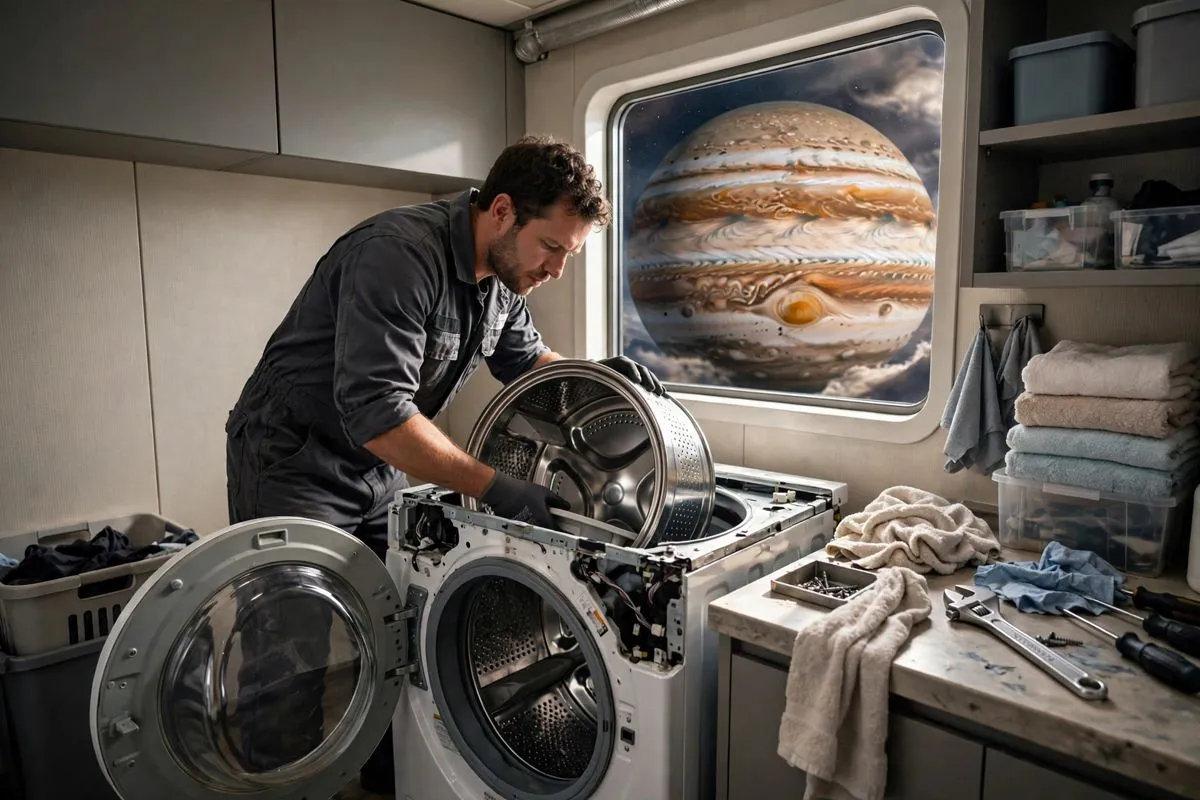
If your home sits within a mile or two of the ocean in Jupiter, salt air is working on your washer every day — constantly, not just during storms. It settles on control boards, creeps along wire connectors, pits chrome and rusts hinges, and in beachside neighborhoods like Jupiter Inlet Colony and Juno Beach it is the biggest reason washers die years ahead of schedule. The good news: corrosion is slow, visible if you know where to look, and often repairable when caught early.
What does salt air actually do to a washer?
Salt itself is not the problem — salt plus humidity is. Jupiter's coastal air carries fine salt particles that settle on every surface inside your home, and in our humidity those particles pull moisture out of the air and form a thin, conductive, corrosive film. That film does three kinds of damage:
- •It corrodes metal directly. Door hinges, drum supports, fasteners and any unprotected steel slowly rust — small orange spots first, weakened flaking metal later.
- •It attacks electronics. Control boards and wire connectors develop green, crusty corrosion on their contact points. The connection gets worse a little at a time, which is why corrosion-related board failures often look "random" at first — the washer works Monday, throws an error Wednesday, works again Friday.
- •It accelerates bearing and seal wear. Salt crystals work into grease and rubber, so washer drum bearings grind themselves down early and door seals get brittle faster than they do inland.
Laundry rooms take the worst of it. Many Jupiter homes have laundry areas near a garage entrance, pool door or open breezeway — "outdoor-adjacent" rooms where ocean air circulates freely — and machines in that setup age noticeably faster than the same machines in an interior, air-conditioned room.
Which washer parts does salt air hit hardest?
- •Washer inlet valves and supply hoses. The valve screens and hose connections sit in damp, salty air — an ideal corrosion target. Rusted screens restrict fill flow, and corroded hose fittings are a common cause of slow fills and seep leaks in coastal homes.
- •Washer drum bearings and door boots. The rear bearing sits in a damp environment by design; add salt and it fails early, announcing itself with a roar during the spin cycle. Door boot folds trap moisture and develop rust staining and cracking.
- •Control boards in every washer. Corroded board connections are behind a large share of the "dead display," error-code and intermittent-failure calls we run near the inlet.
- •Washer hinges, panels and fasteners. You will usually see this one first: hinge springs corrode until the door drops heavily, and rear panels and fasteners rust from the inside out as moist laundry air meets salt air at the vent.
What are the early signs of salt-air corrosion?
Catch these early and most are cheap to deal with:
- •Rust spots or bubbling paint on washer edges, hinges, screws or rear panels
- •Pitted, dull or rough chrome and stainless trim that used to wipe clean
- •White or green crusty buildup on visible wire connectors (look under a washer lid or behind the control panel)
- •A control board that fails "early" — a washer under six or seven years old with board or sensor problems near the coast deserves a corrosion check first
- •A washer getting louder on spin, or cycles that take longer than they used to
- •Doors that sag, squeak or no longer seal flat because the hinge metal has thinned
What can you do to slow salt air down?
You cannot keep ocean air out of a Jupiter home, but you can cut the damage rate significantly:
- •Keep the laundry room ventilated and dry. Run the exhaust or a small fan after laundry sessions, and leave the washer door and detergent drawer ajar between loads so the drum dries out.
- •Wipe seals and exposed metal monthly. A damp cloth with plain water removes the salt film before it starts pulling moisture. Focus on the washer door boot folds, hinges and detergent drawer.
- •Clean the washer's inlet screens and pump filter twice a year. Rinse the valve screens and clear the pump filter so corrosion and lint do not choke fill and drain flow. In a beachside home this is the single highest-value task on this page.
- •Position appliances thoughtfully. If you are replacing a unit, avoid placing it against a louvered exterior door or beside a frequently open pool/garage door — a few feet of interior distance measurably reduces exposure.
- •Do not ignore the first rust spot. A small rust patch on a hinge or panel edge is a warning, not a cosmetic issue. Sanding and touching up a tiny spot is a ten-minute job; a rusted-through hinge mount is a repair bill.
Which failures are corrosion — and which are just normal wear?
Honest diagnosis matters here, because the fix differs:
- •Usually corrosion-driven: early control-board and connector failures, rusted hinges and mounts, coil deterioration, and multiple unrelated electrical faults appearing in the same washer within a year or two.
- •Usually normal wear: a worn washer belt, a washer drain pump at the end of its life, a tired door gasket on a ten-year-old machine. These fail the same way inland as they do here — salt just shortens the timeline somewhat.
The tricky cases are mixed — a bearing that wore out at year six instead of year ten. That is why our process starts with a full diagnostic before any quote: replacing a part without cleaning its corroded connections is how you end up paying for the same repair twice.
When does repairing a corroded washer still make sense?
More often than people expect. Corrosion is frequently localized: one connector, one hinge, one fan motor, a set of coils that need cleaning rather than replacing. If the structure and the expensive sealed components are sound, a targeted repair plus a cleaning puts the machine back in service for years.
Replacement makes sense when corrosion is everywhere at once — boards, frame, mounts and drum all damaged — or when a structural part has rusted through. Our rule on every job: if the honest repair costs more than half the price of a comparable new washer, we will tell you to replace it. Typical ranges are on our washer repair cost guide and our full list of repair services.
FAQs
How close to the ocean does salt-air damage become a real problem? ▾
There is no hard line, but the effect is strongest within roughly the first mile or two of the shoreline and in neighborhoods on the Intracoastal or inlet — places like Jupiter Inlet Colony and Juno Beach. Homes further inland still get salt exposure, just at a slower rate, so the same habits help; they simply buy you more time.
Can a corroded control board be cleaned, or does it always need replacing? ▾
Sometimes. If the corrosion is on the connectors and the board's traces are intact, cleaning the contacts and replacing the damaged connector can restore full function. If corrosion has eaten through traces or components, replacement is the honest fix. It is a judgment call we make during the diagnostic, before you approve any work.
Does stainless steel protect my washer from salt air? ▾
Only partly. Stainless resists rust better than painted steel, but lower grades still pit and tea-stain in coastal air — and the parts that actually fail (boards, connectors, bearings, hinges, hoses) are rarely stainless. The door finish is the last thing salt air damages, not the first.
My washer is rusting around the detergent drawer. Is that salt air? ▾
Very likely, yes — that area stays damp, and damp plus salt film is the fastest corrosion recipe in the laundry room. Wipe the drawer housing dry after laundry days, leave the drawer open to air out, and have the rust treated before it spreads into the frame. If the machine is also getting loud on spin, get it checked — the same moisture is reaching the bearings.
Salt air doesn't have to win
Jupiter Washer Pros is based at 4300 U.S. Hwy 1 in Jupiter, and since 2020 we have helped more than 1,000 local customers keep coastal washers running — rated 4.8 by those customers for explaining problems plainly before quoting anything. Seeing rust spots, early board failures or a washer getting louder on spin? Call us at (561) 316-0595. We run a full diagnostic first, show you exactly what the salt has done, and give you a fixed quote you approve before any work begins — same-day appointments available most days. Or reach us through our contact page.
Dealing With This Problem Right Now?
Our Jupiter technicians diagnose it in your home and quote the full price before any work begins. Call (561) 316-0595.